
Bunions and hammertoes
- How long is recovery from bunion surgery?
- Can a bunion go away without surgery?
- What is a claw toe?
- Can a bunion form on the little toe?
- Do toe pads and wider shoes help hammertoes?
- Is minimally invasive bunion surgery less painful?
- What causes a bunion to form?
- What is the difference between a flexible and a rigid hammertoe?
- Why do hammertoes get worse over time?
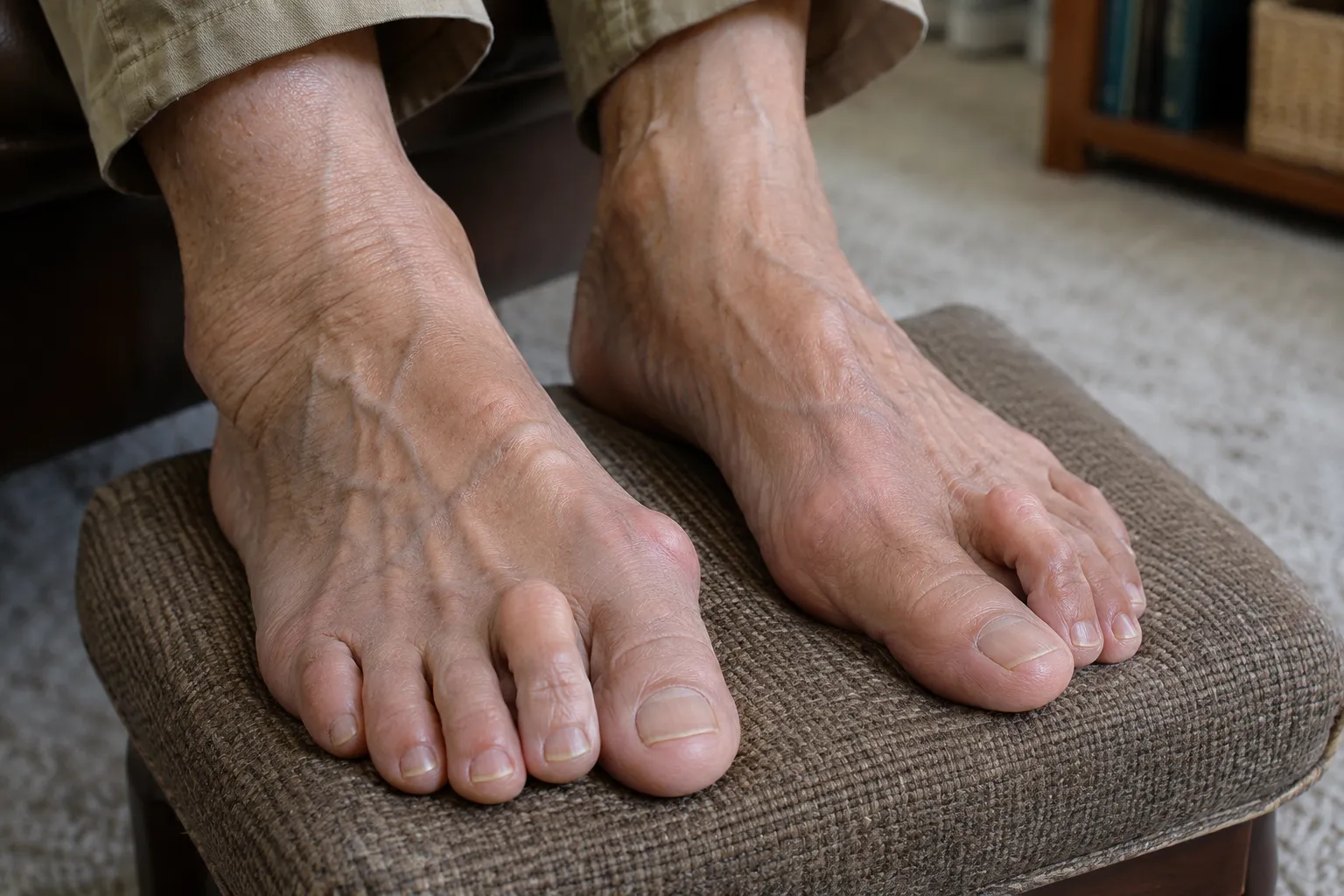
The word that does the most quiet work in bunion and hammertoe questions is "corrected". The American College of Foot and Ankle Surgeons writes: "Often, patients with hammertoe have bunions or other foot deformities corrected at the same time." Read it slowly. "Often" is not "always", and "at the same time" names a schedule, not a guarantee. Each question below turns on a small word of that kind.
Nine questions and the wording each one turns on
- How long is recovery from bunion surgery? Turns on what "recovery" is counted to: walking, shoes, or work.
- Can a bunion go away without surgery? Turns on what "go away" means: the bump, or the pain.
- What is a claw toe? Turns on which name the paperwork uses for the shape of the toe.
- Can a bunion form on the little toe? Turns on the word "bunion" and which toe it is attached to.
- Do toe pads and wider shoes help hammertoes? Turns on "help": easing a toe, or changing it.
- Is minimally invasive bunion surgery less painful? Turns on "less", and on less than which procedure.
- What causes a bunion to form? Turns on "causes" versus "contributes to".
- What is the difference between a flexible and a rigid hammertoe? Turns on a single adjective in an exam note.
- Why do hammertoes get worse over time? Turns on "worse": in pain, in shape, or in shoe fit.
What the nine have in common
Every answer on this list depends on a comparison that is rarely spelled out: better than what, after how long, and starting from where. AAOS OrthoInfo shows the same habit of precision about shoes: "A deeper toe box will have more room to accommodate a bunion, hammer toes, and a wide forefoot." The claim is about room, and it says nothing about cure.
For readers in Itasca who want the long form, the Royal National Orthopaedic Hospital's patient guide to bunions and lesser toe deformities prints its terms in full. Bunions and Their Treatment on PubMed Central is a published overview, and a UK national think tank report on hallux valgus shows how clinicians frame the open issues in their own words.
A neighboring group where the wording overlaps
Skin that thickens under pressure raises the same kind of wording questions, and the APMA page on corns and calluses is a place to compare terms. Nail questions share the habit of the measuring words "long", "usually" and "less", and they are collected under ingrown toenails and nail fungus.