
A daily foot check sounds vague until you read the actual list. Here is what MedlinePlus puts on paper, followed by the line in it that most readers pass over.
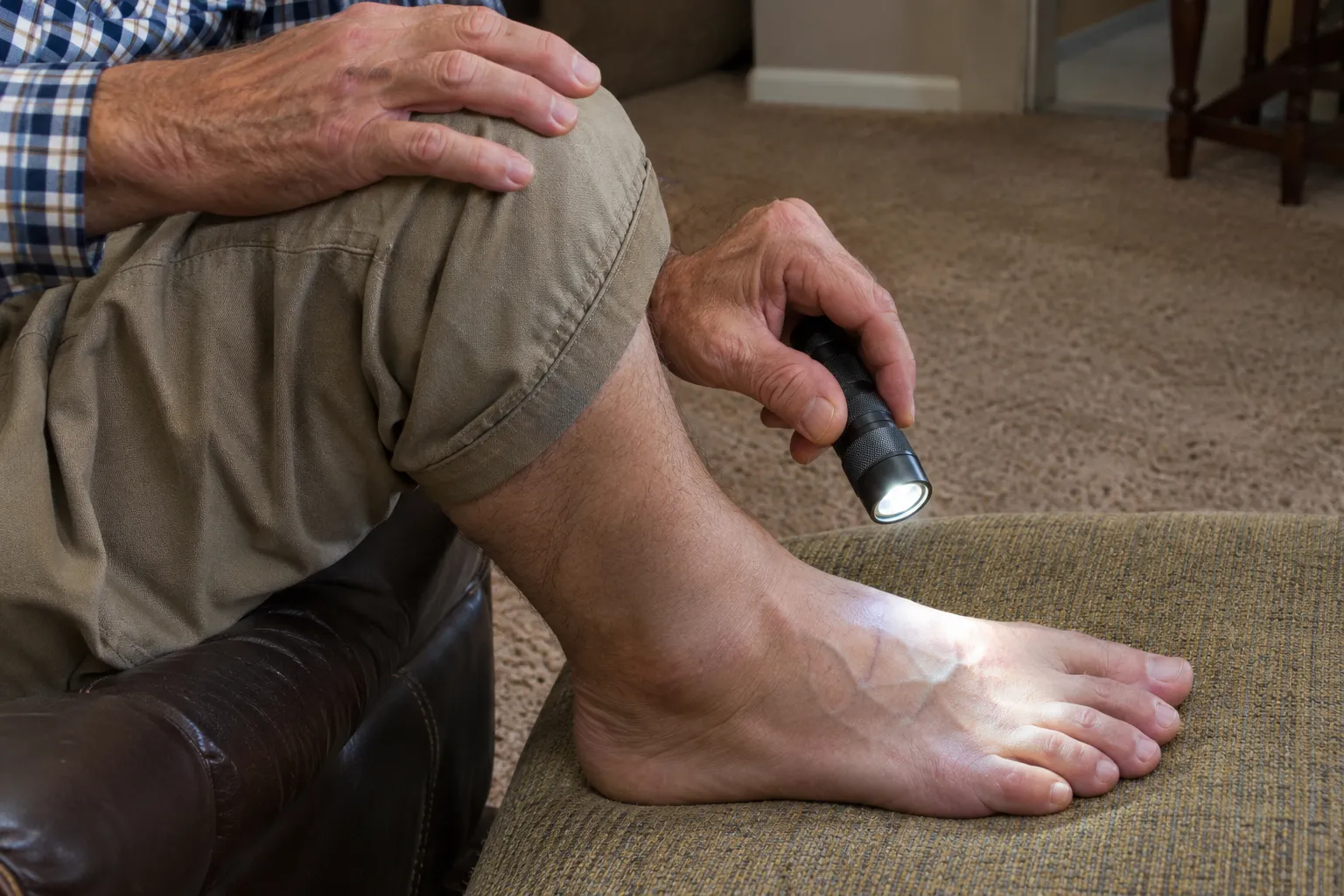
The checklist as written
MedlinePlus tells readers to look for dry and cracked skin, blisters or sores, bruises or cuts, redness, warmth, or tenderness (often absent because of nerve damage), and firm or hard spots. If you cannot see well, MedlinePlus says to ask someone else to check your feet.
The parenthetical that matters
Beside redness, warmth and tenderness, the list carries a note that they are often absent because of nerve damage. That changes how to read a "normal" day. A foot that does not hurt has not necessarily passed the check, because the usual warning signs may be missing.
Two fuller lists to set beside this one
The American Diabetes Association foot care tips and the MedlinePlus encyclopedia entry on taking care of your feet with diabetes cover the same ground in their own words.
What to confirm, and with whom
Ask your clinician which findings on that list mean you should call the office the same day. Get the answer in terms you can act on at home in Itasca, not a general instruction to "watch for problems."
The clause people skip
The checklist is about looking, not feeling. Use your eyes, or someone else's, and do not let a lack of pain stand in for a clean result.